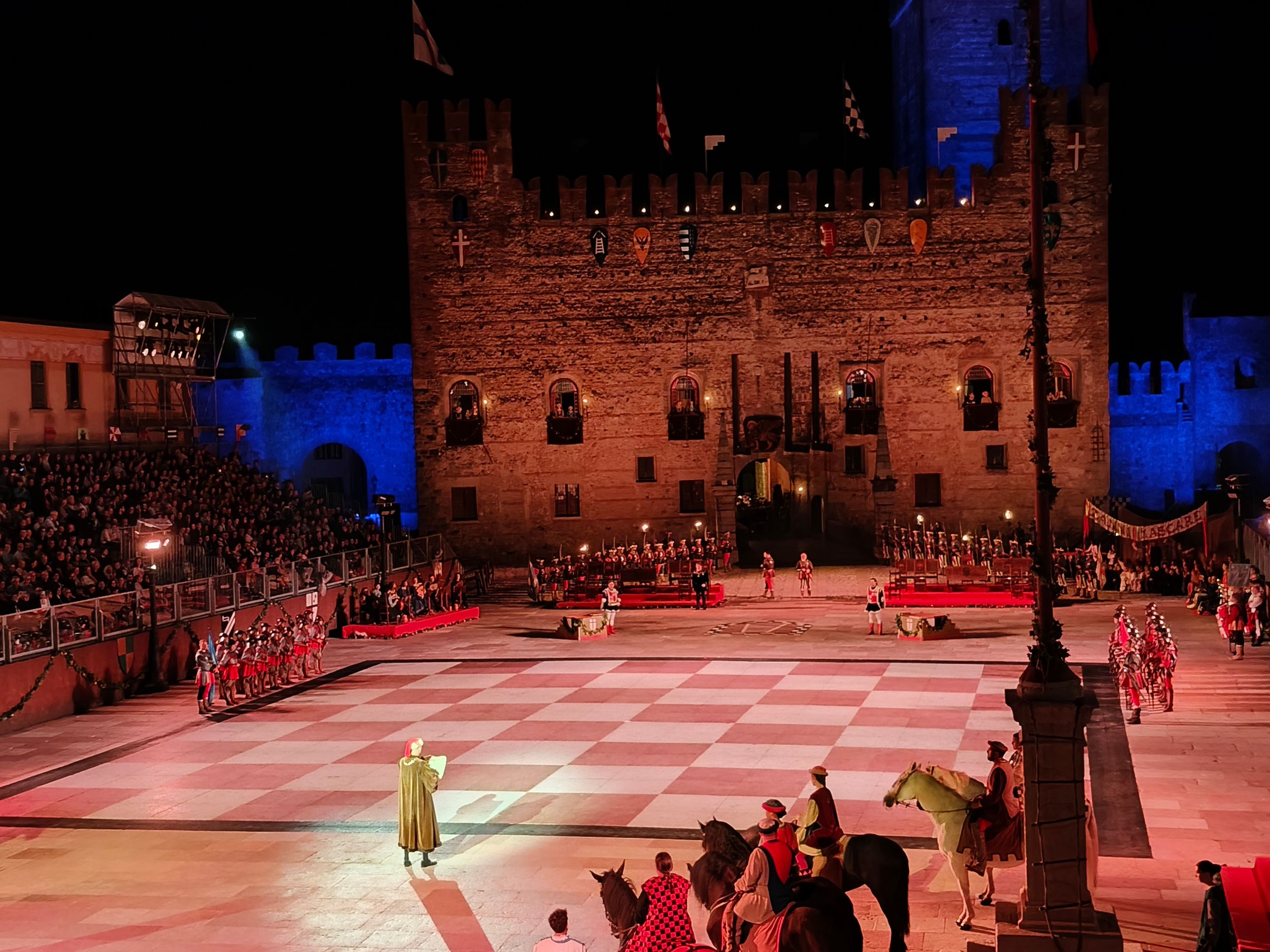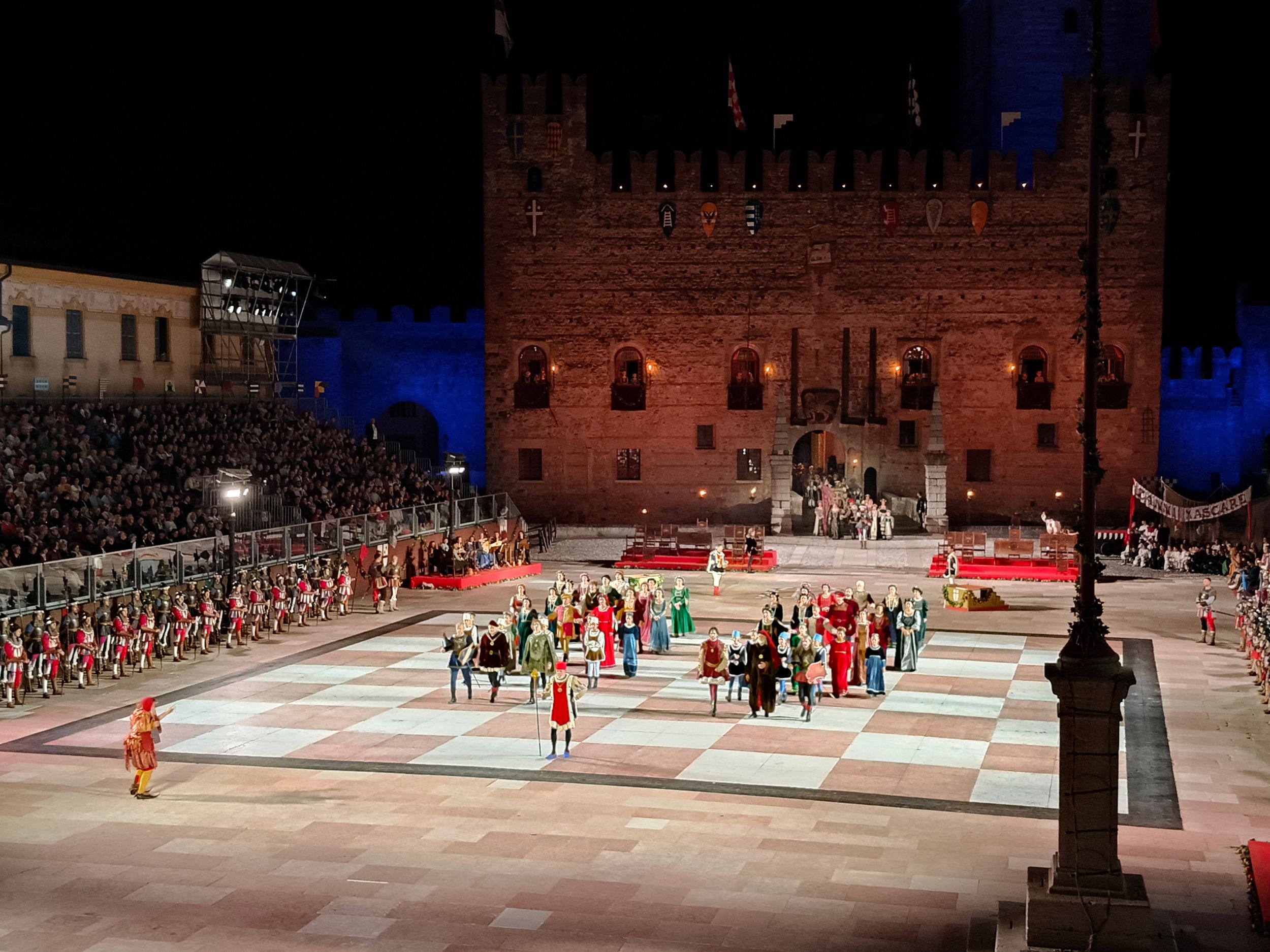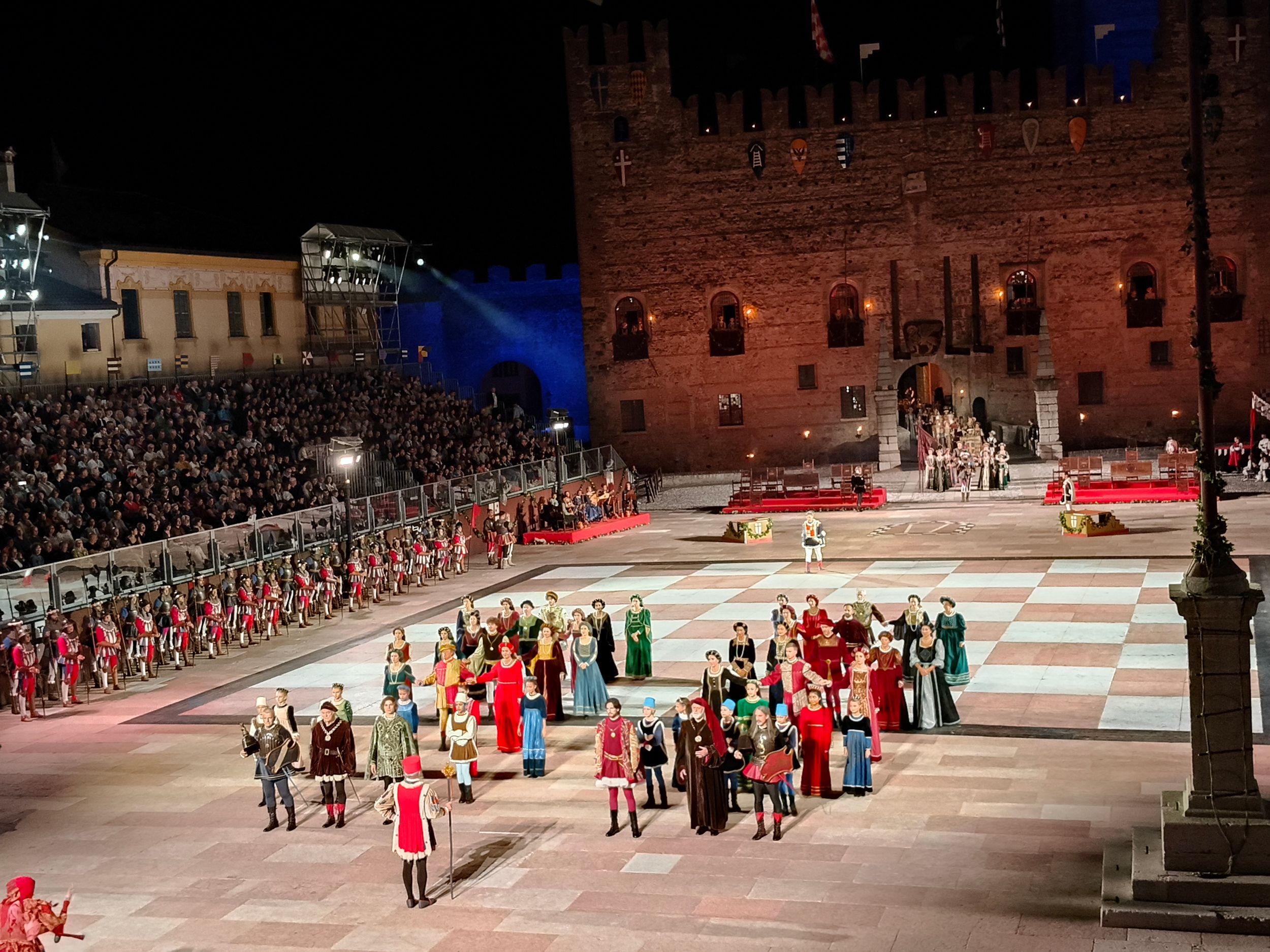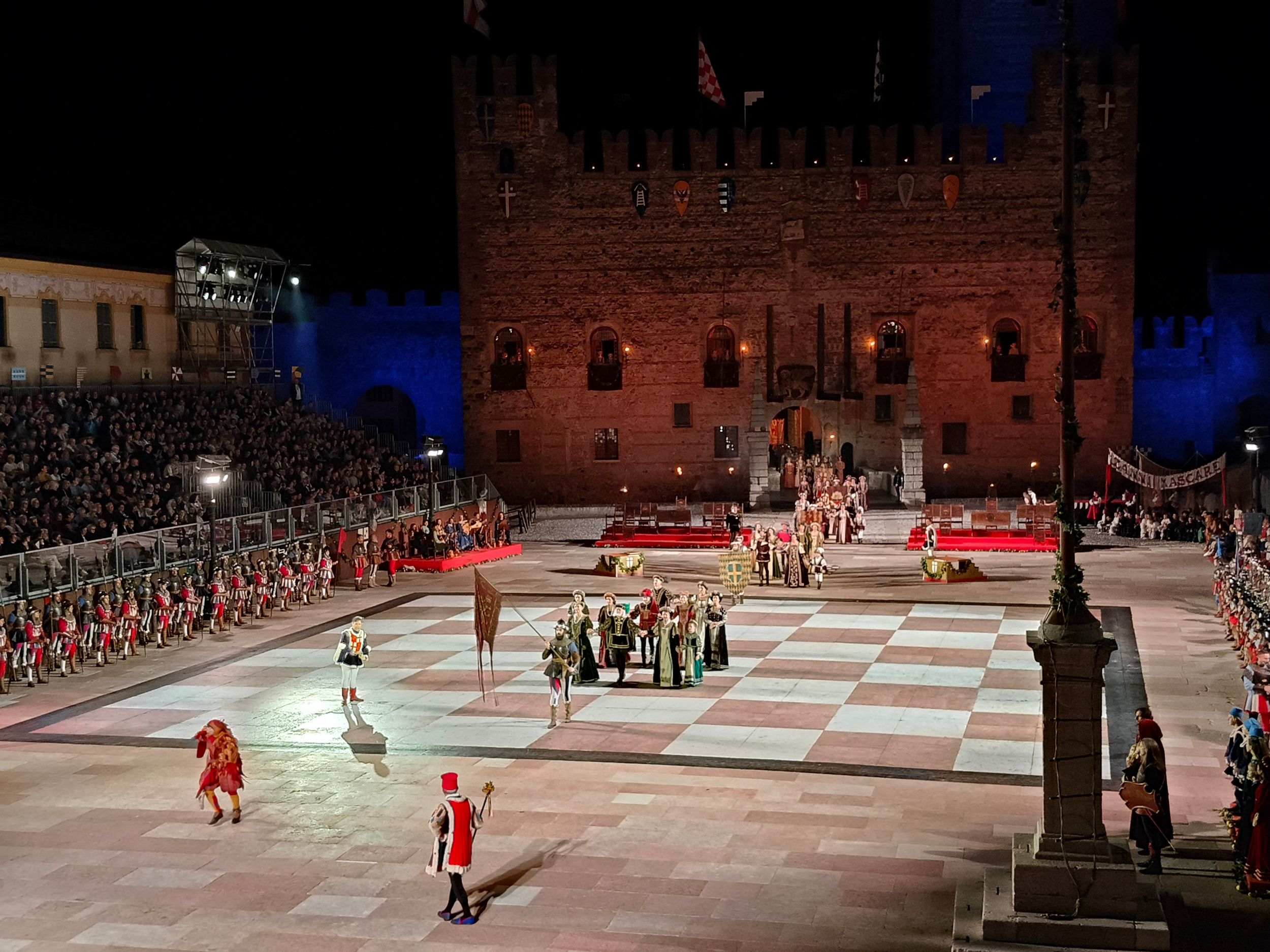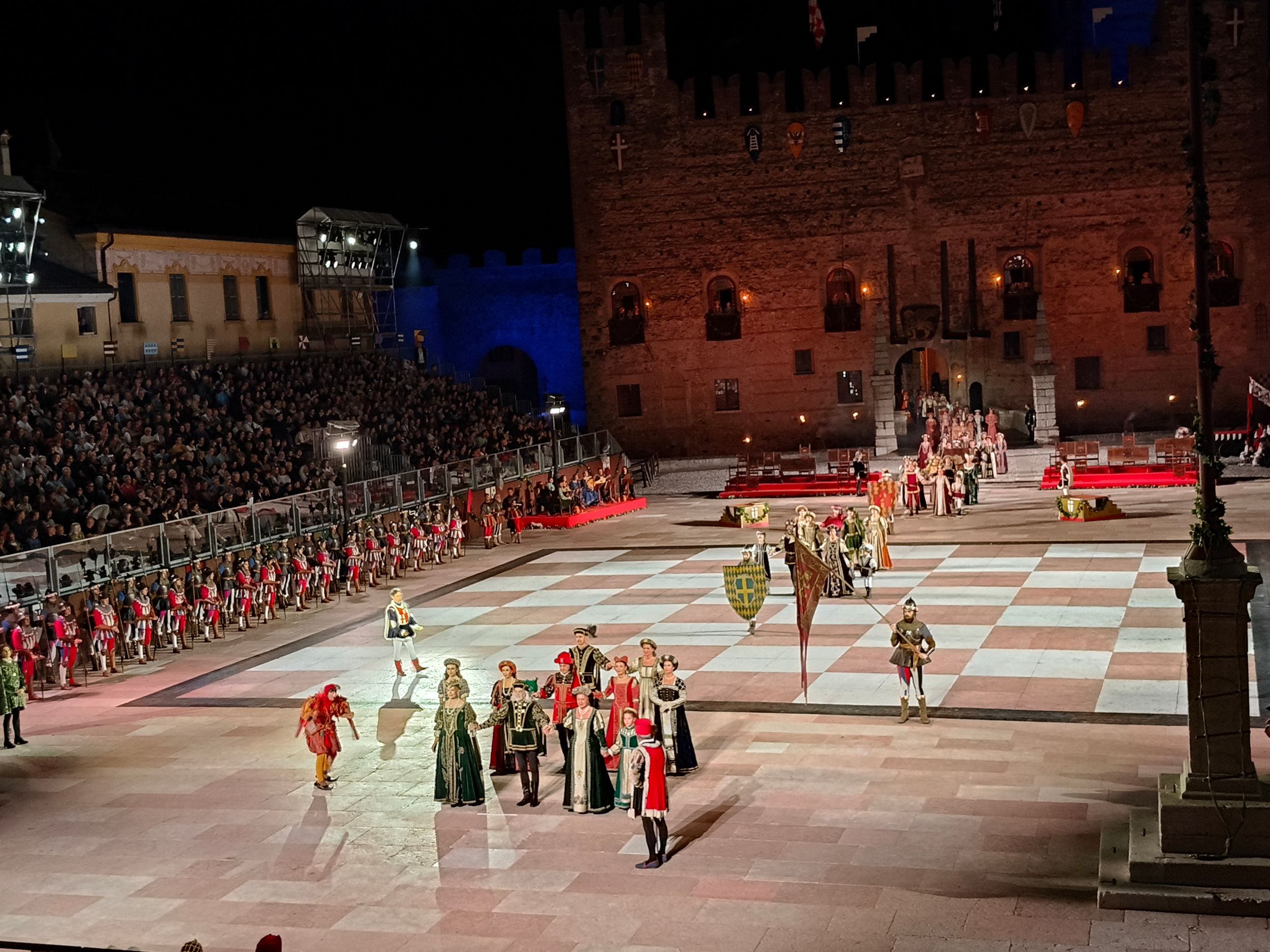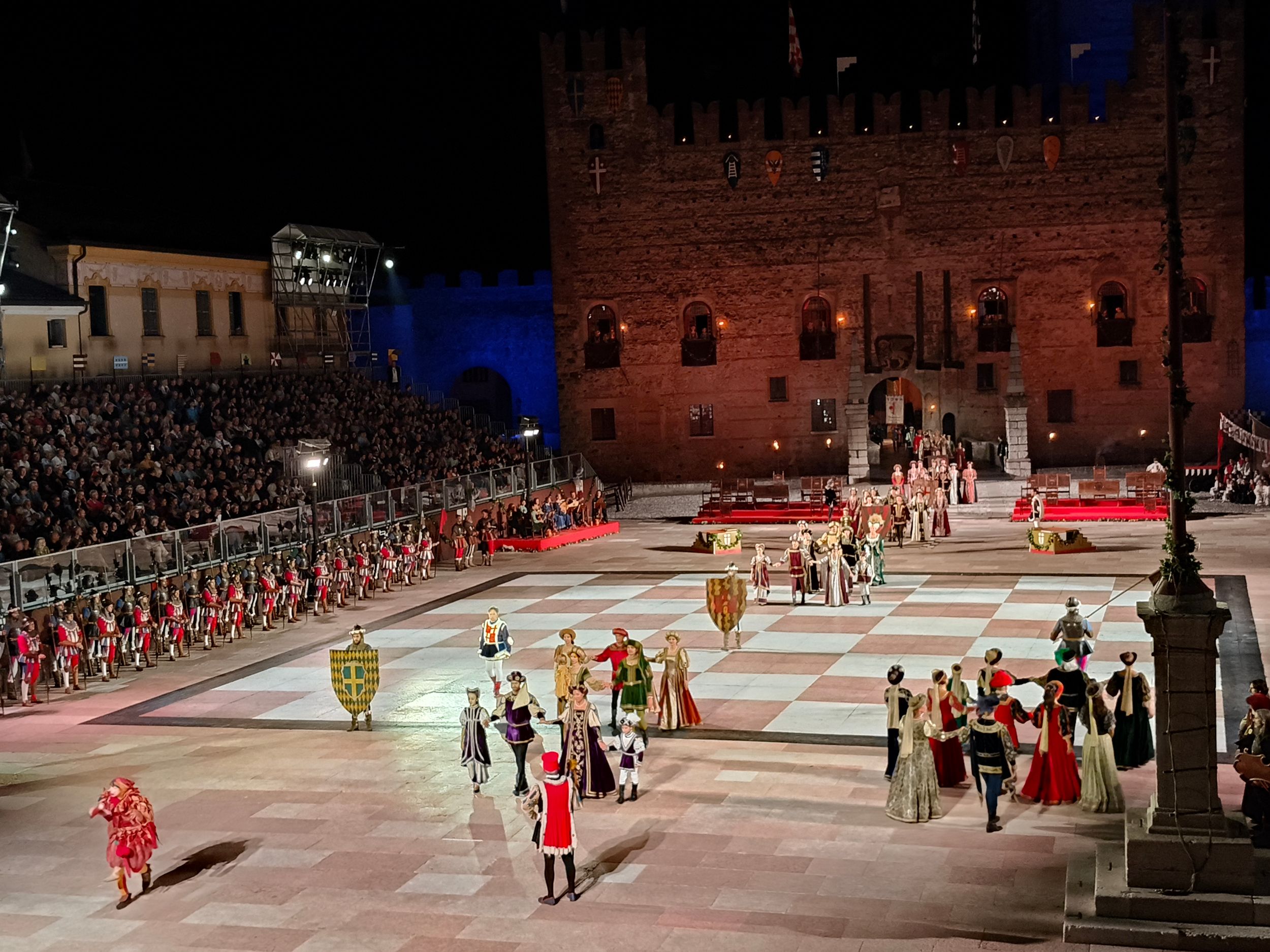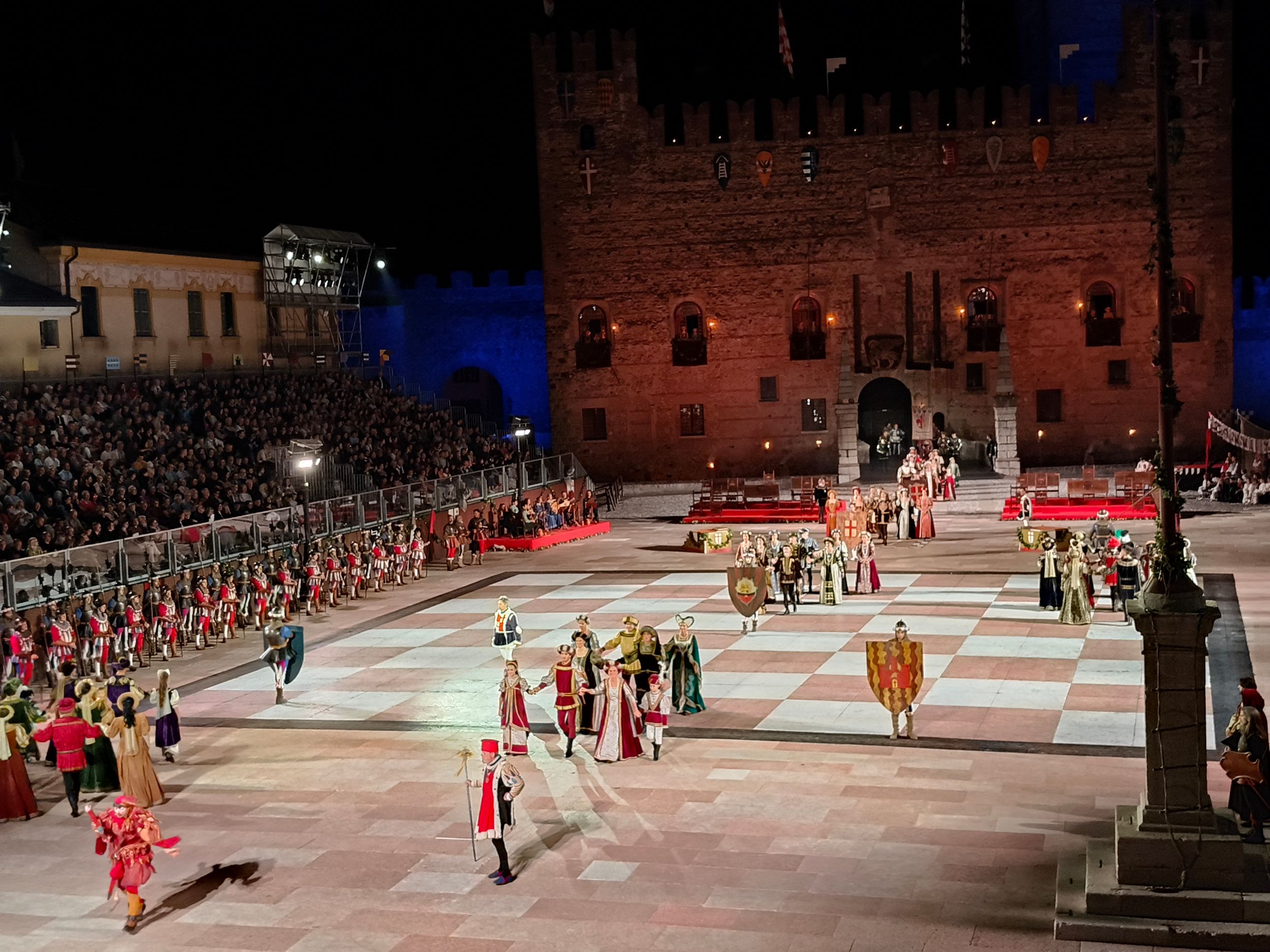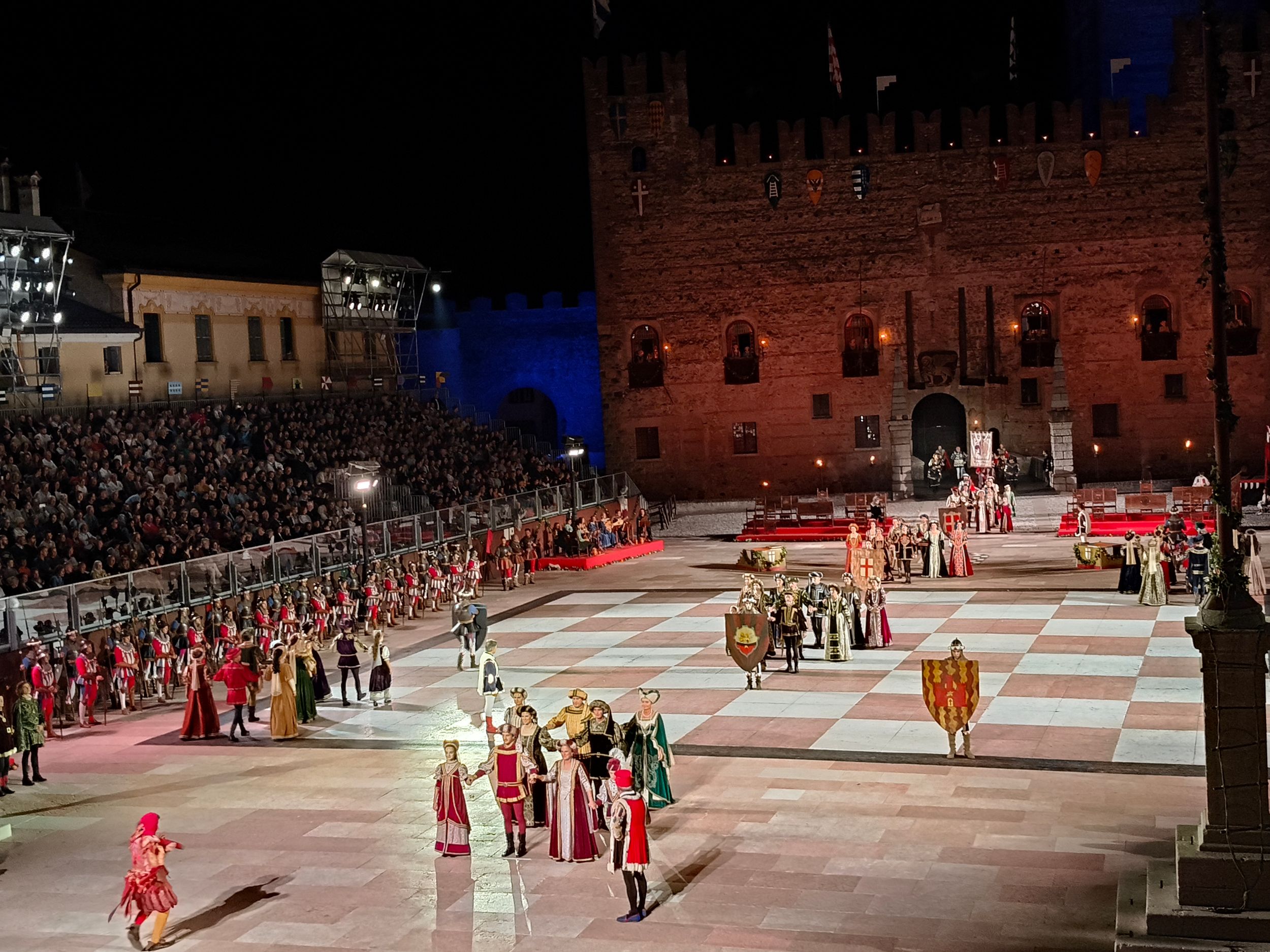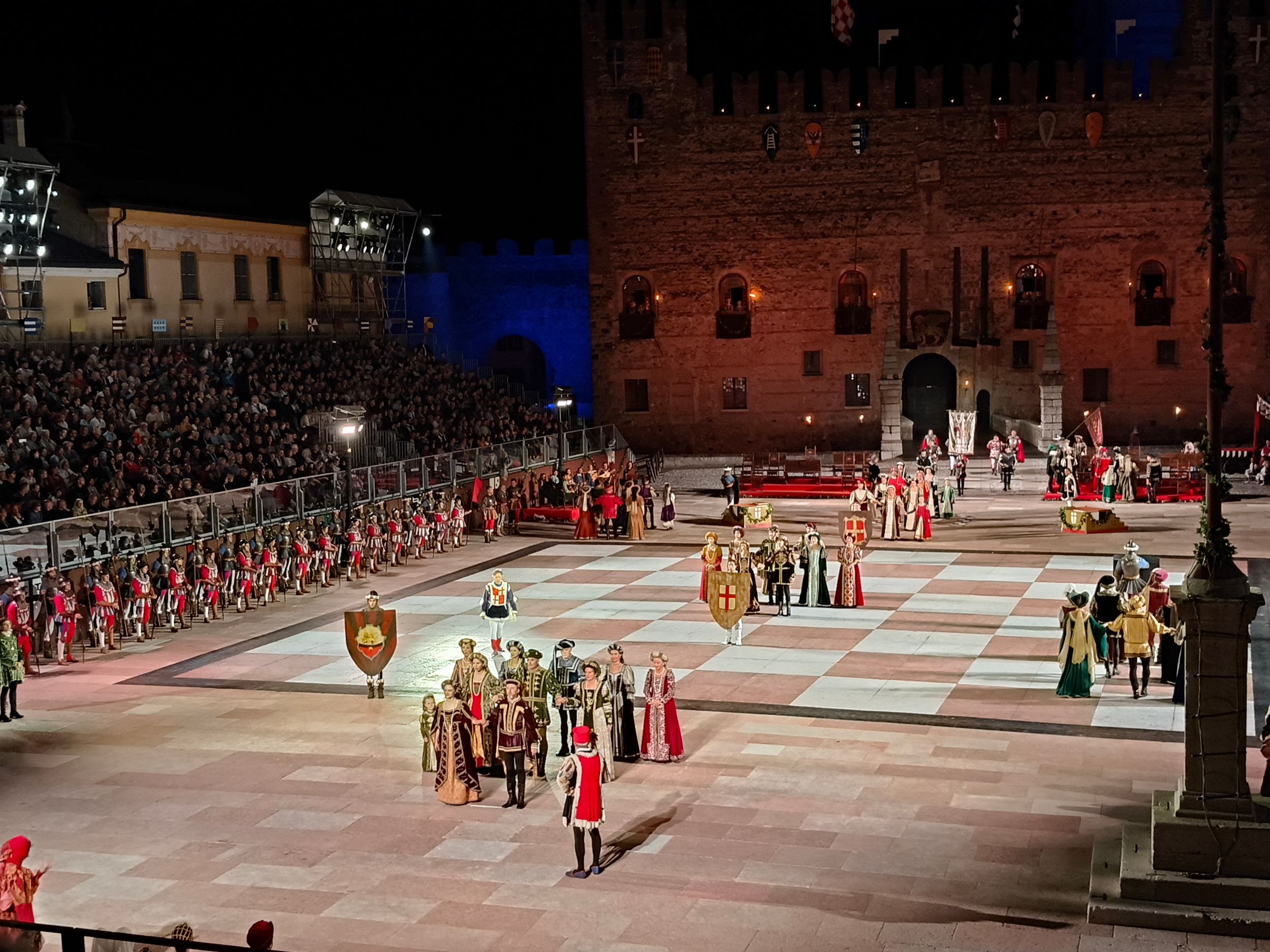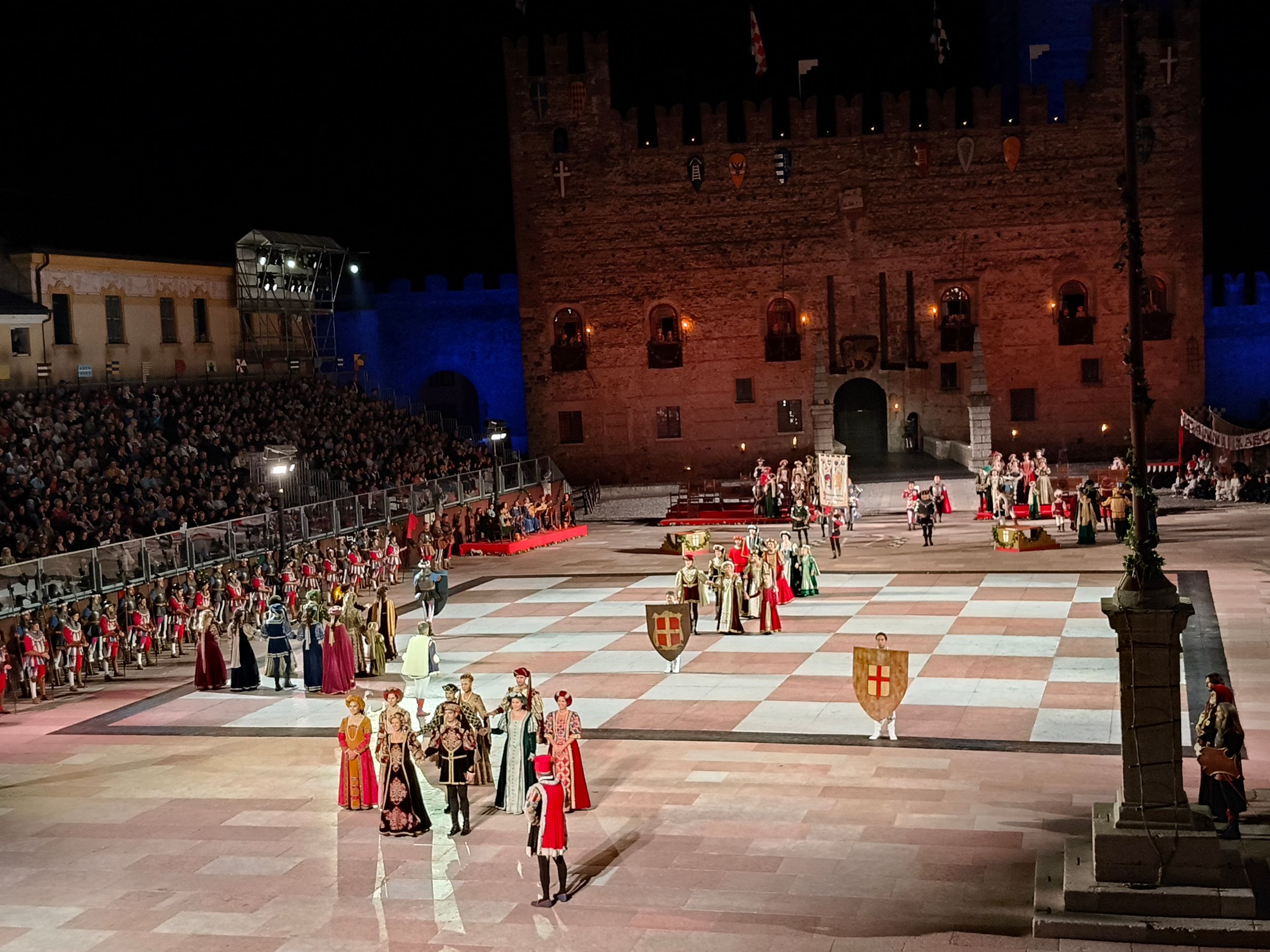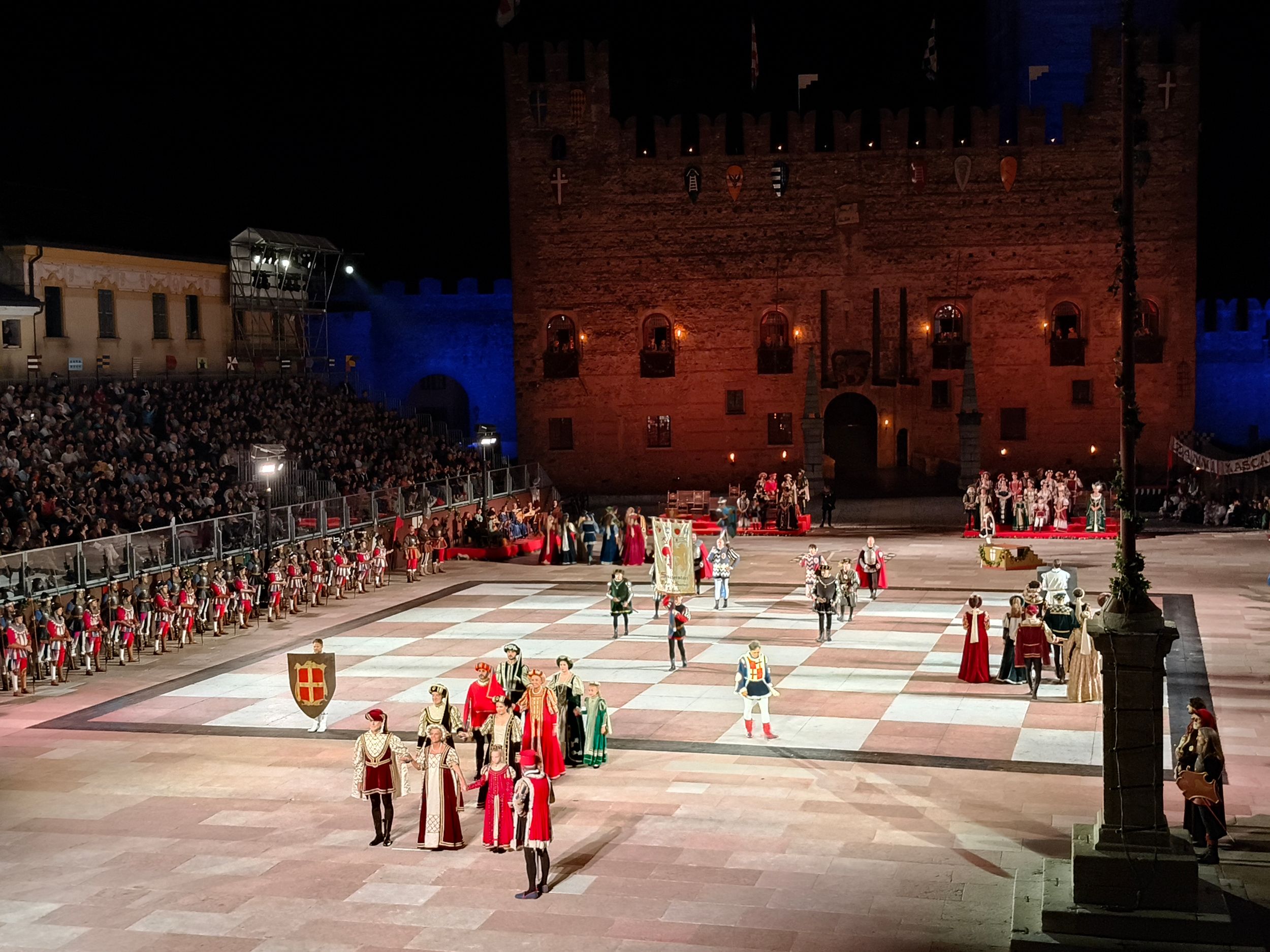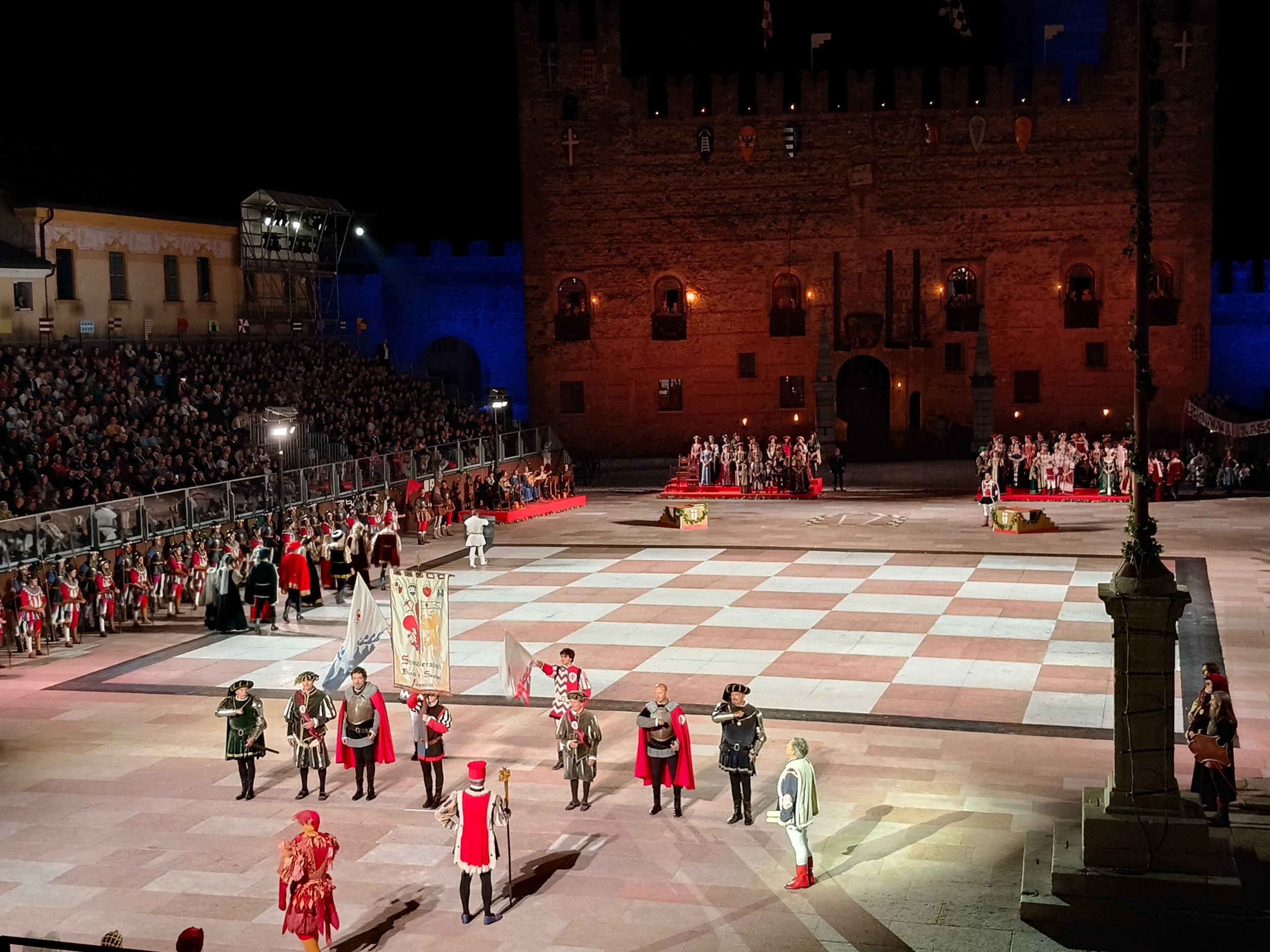
Chess Game with Living Characters
12 / 09 / 2026
Marostik - Vicenza - Italy
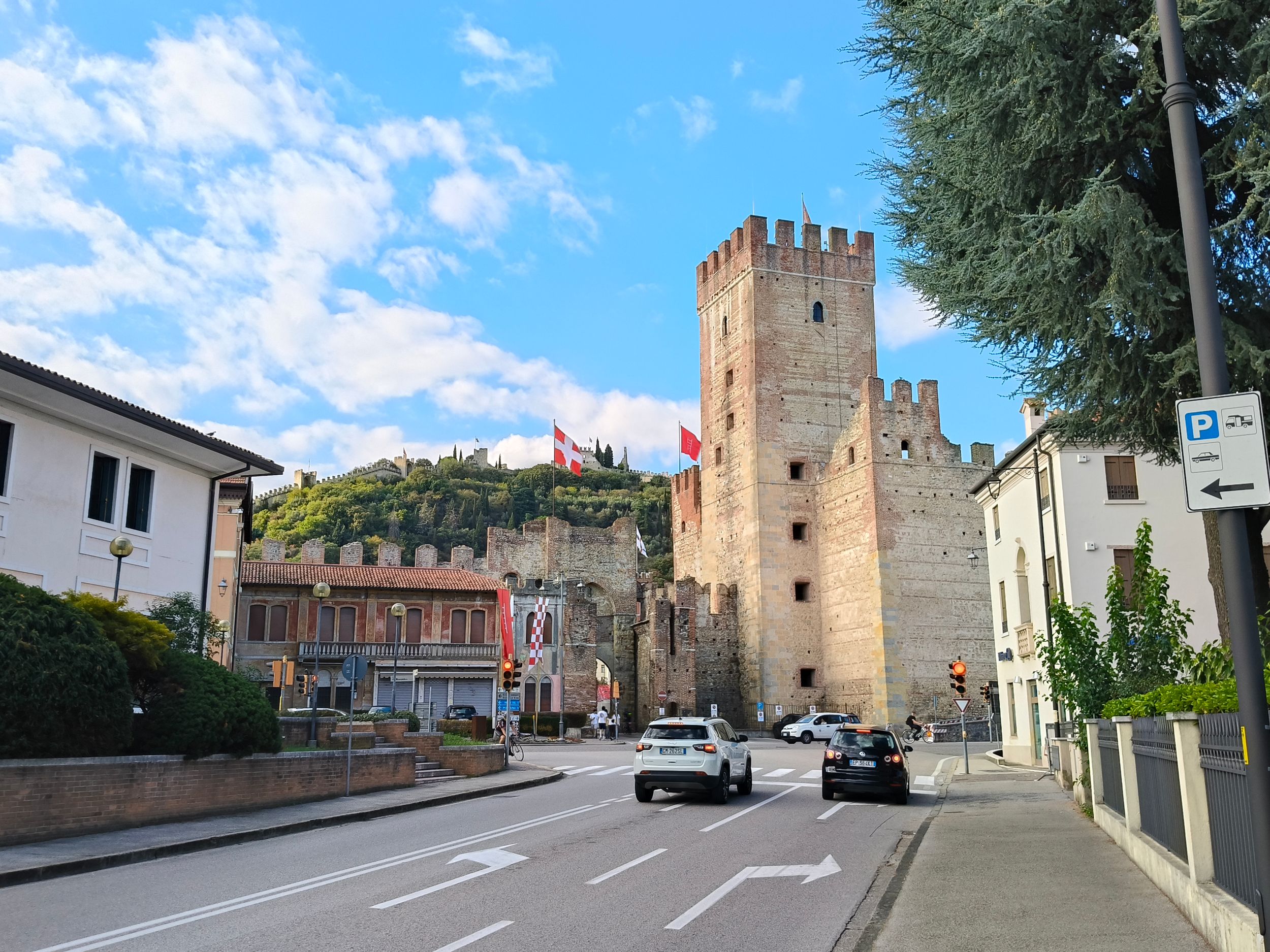
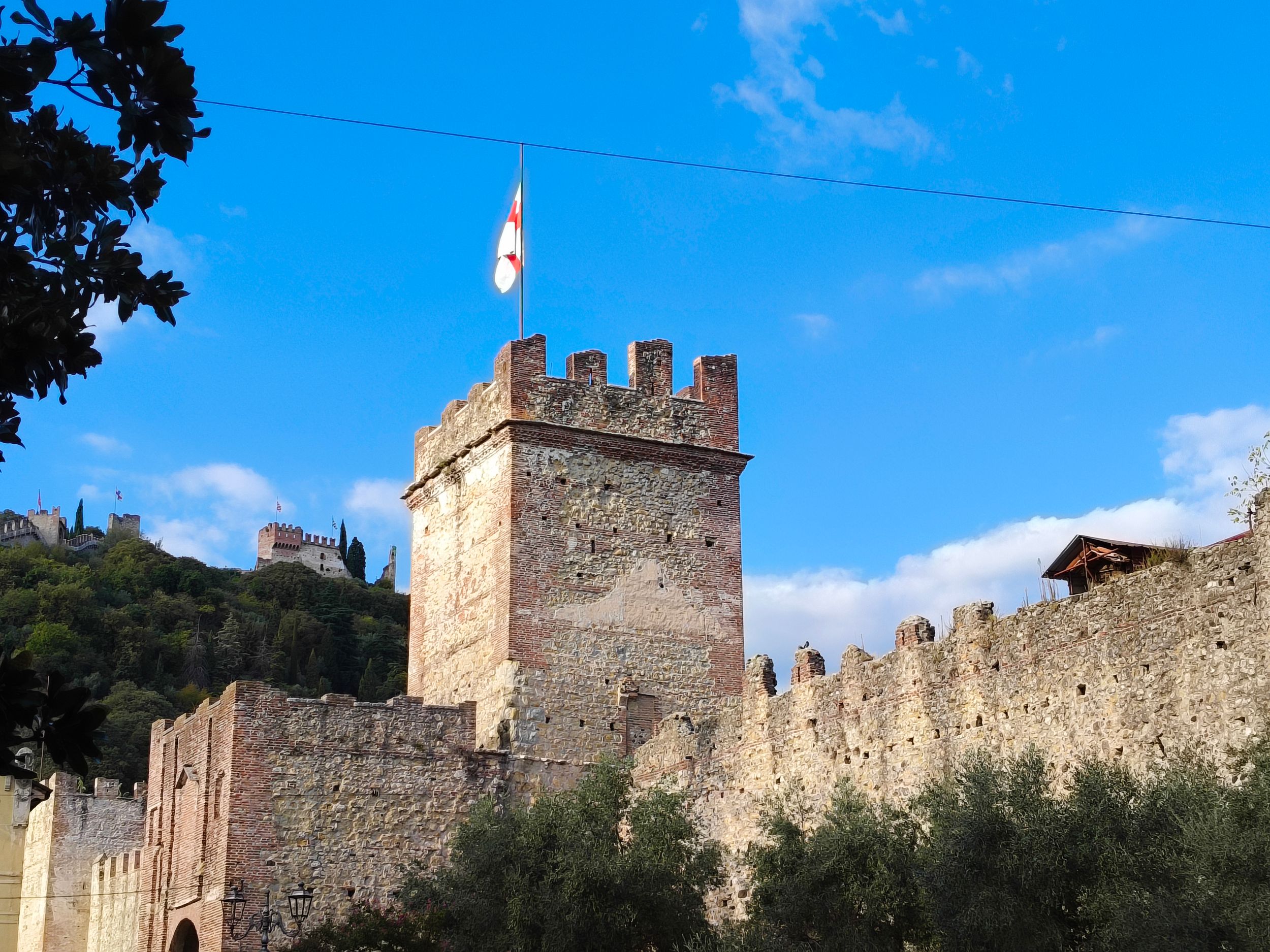
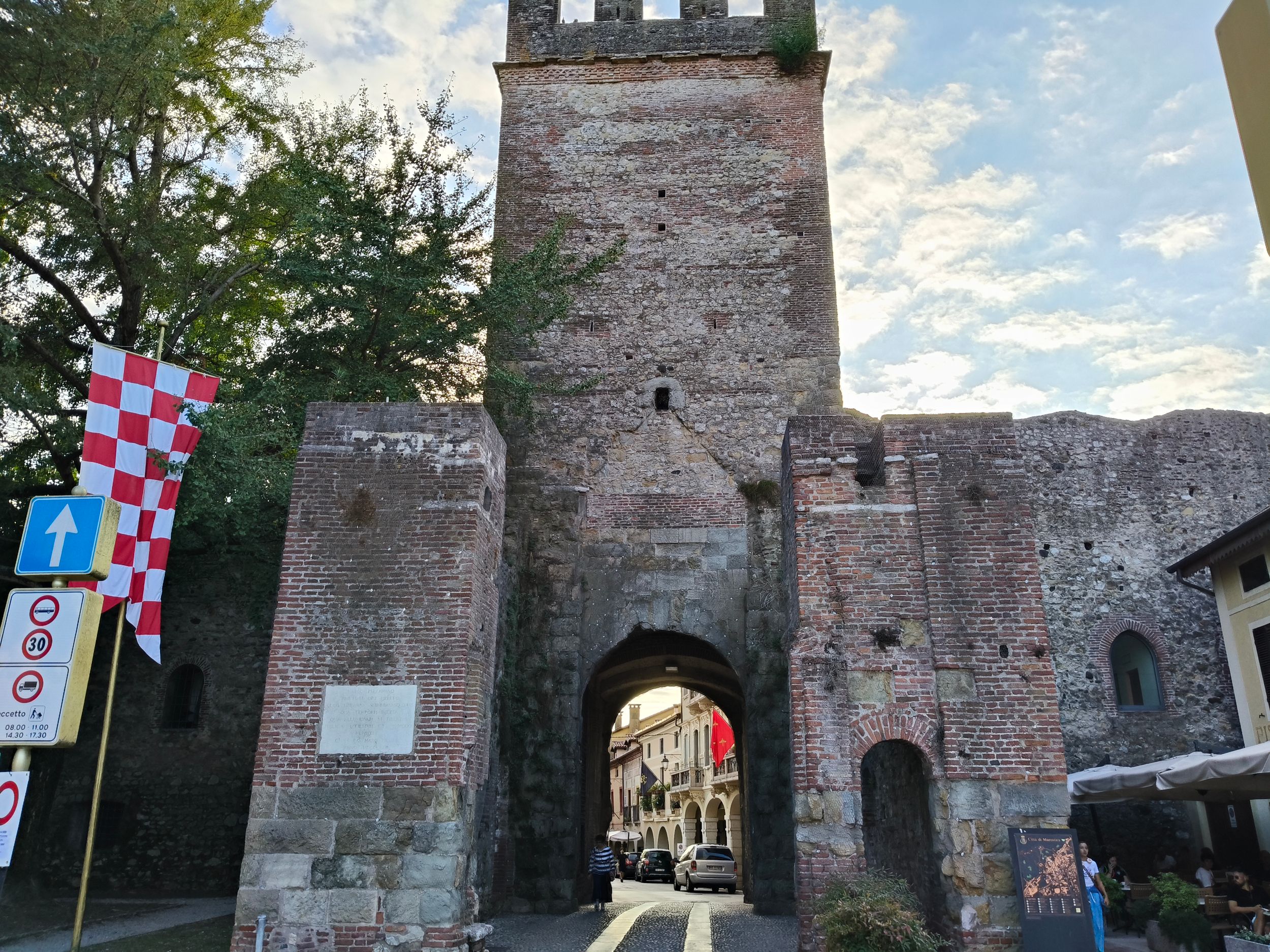
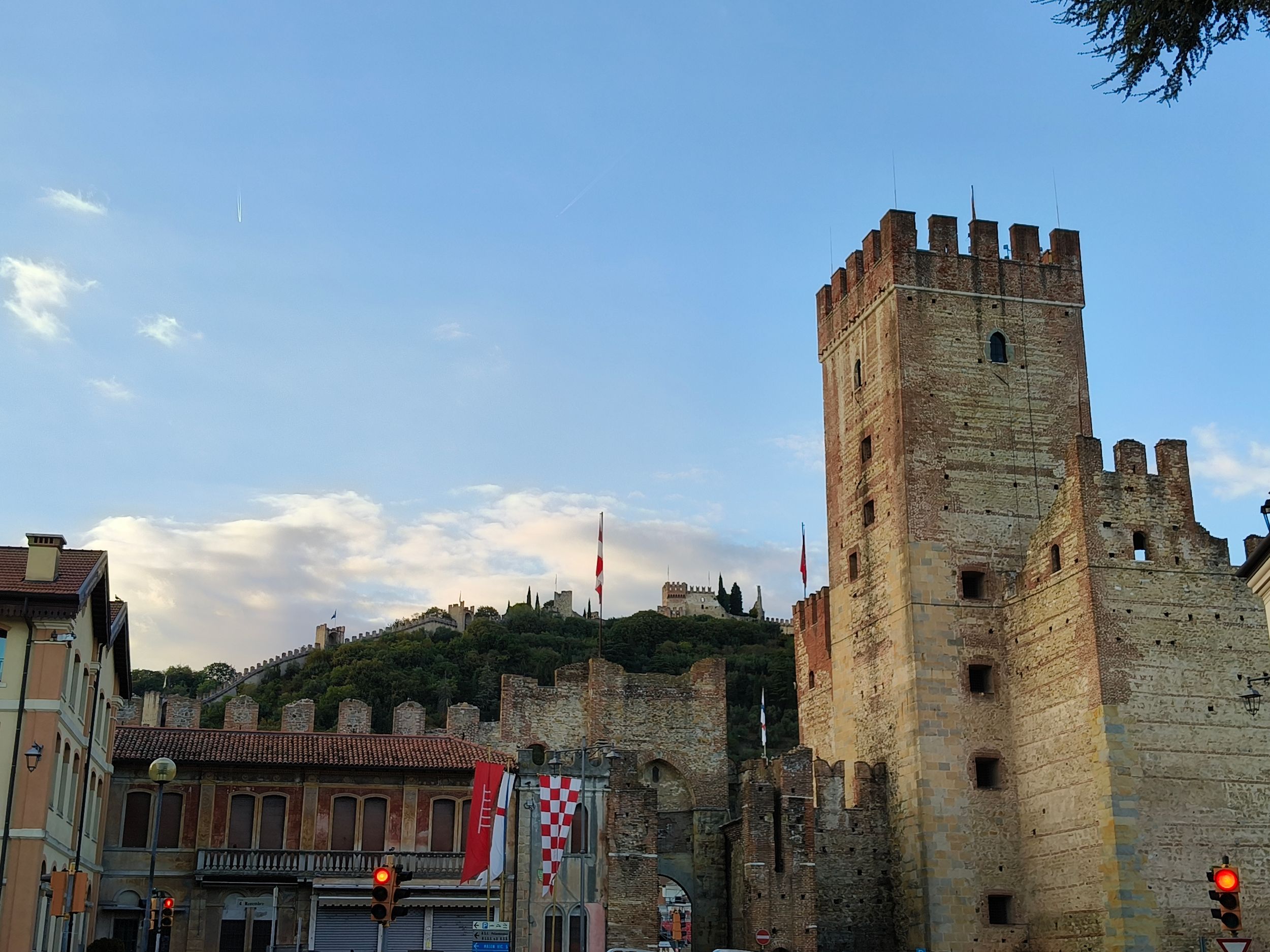
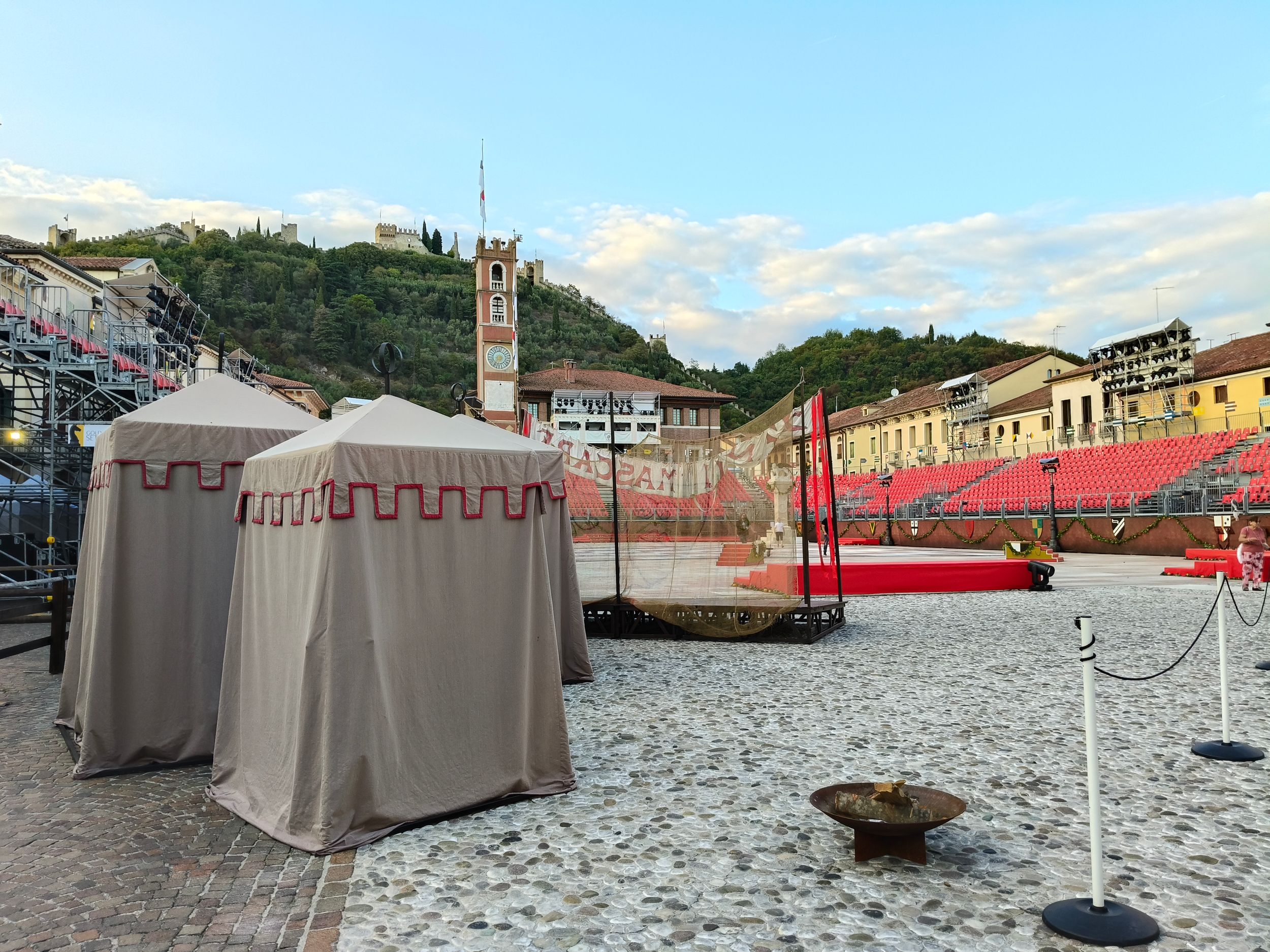
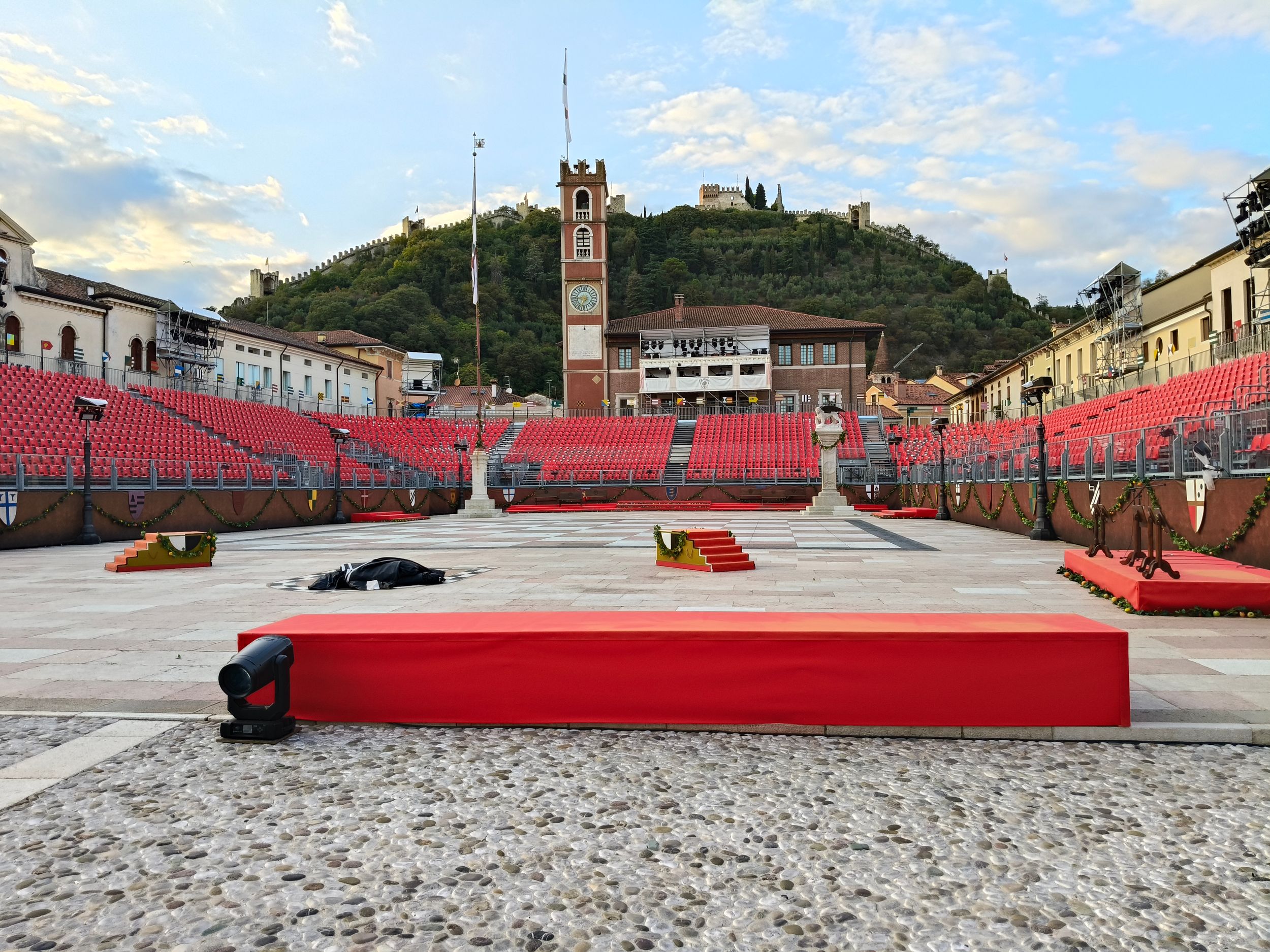
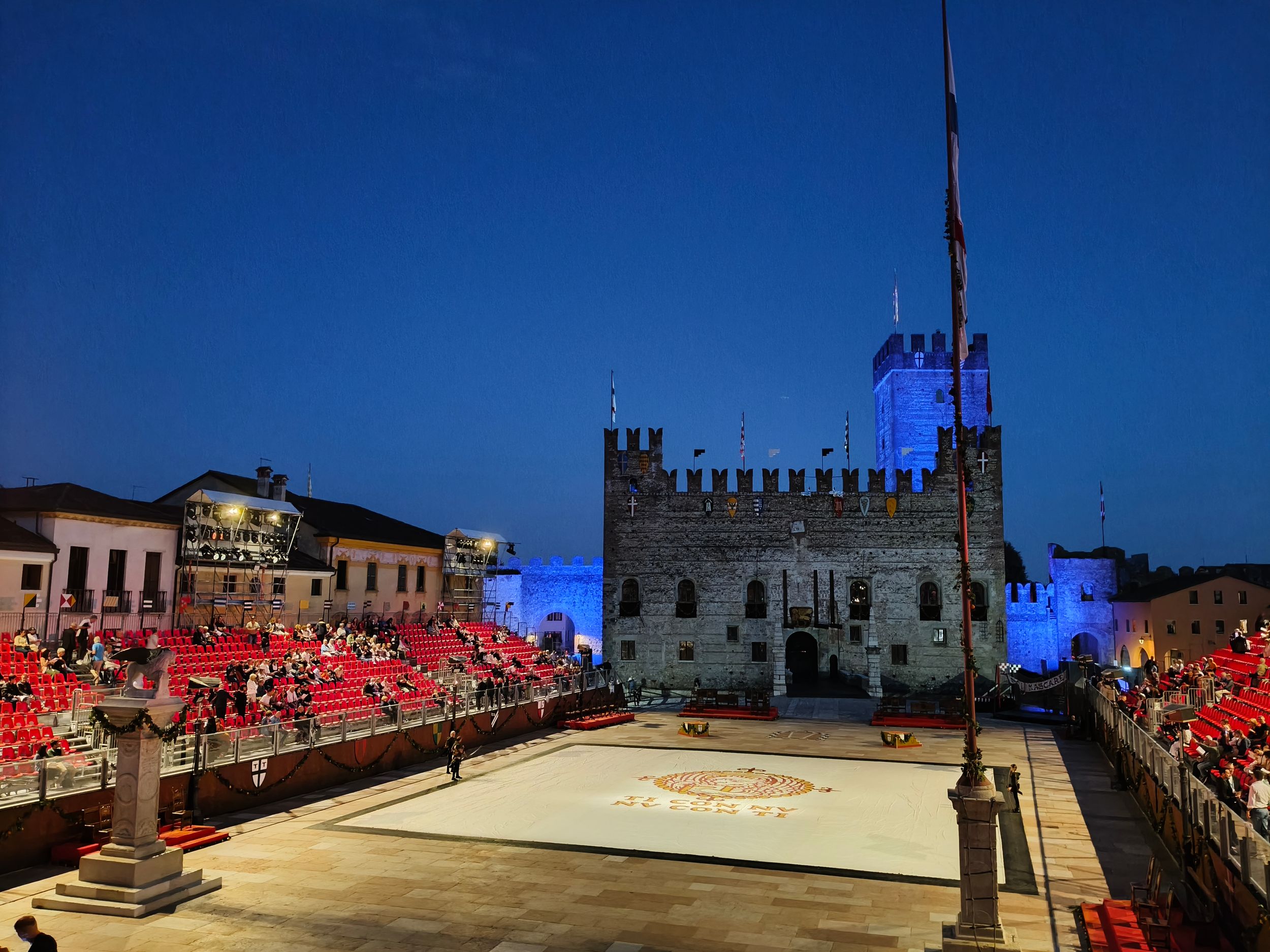
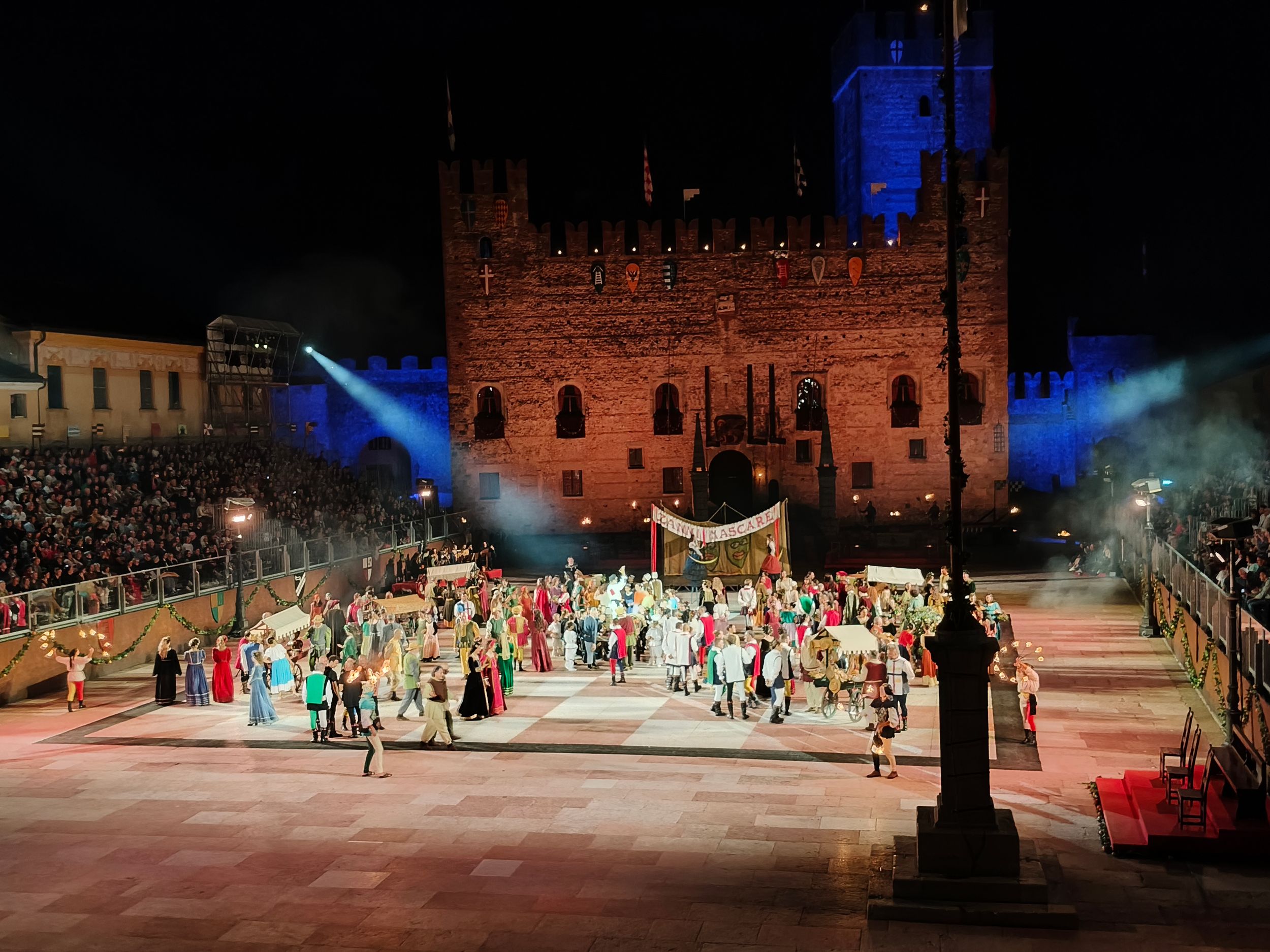
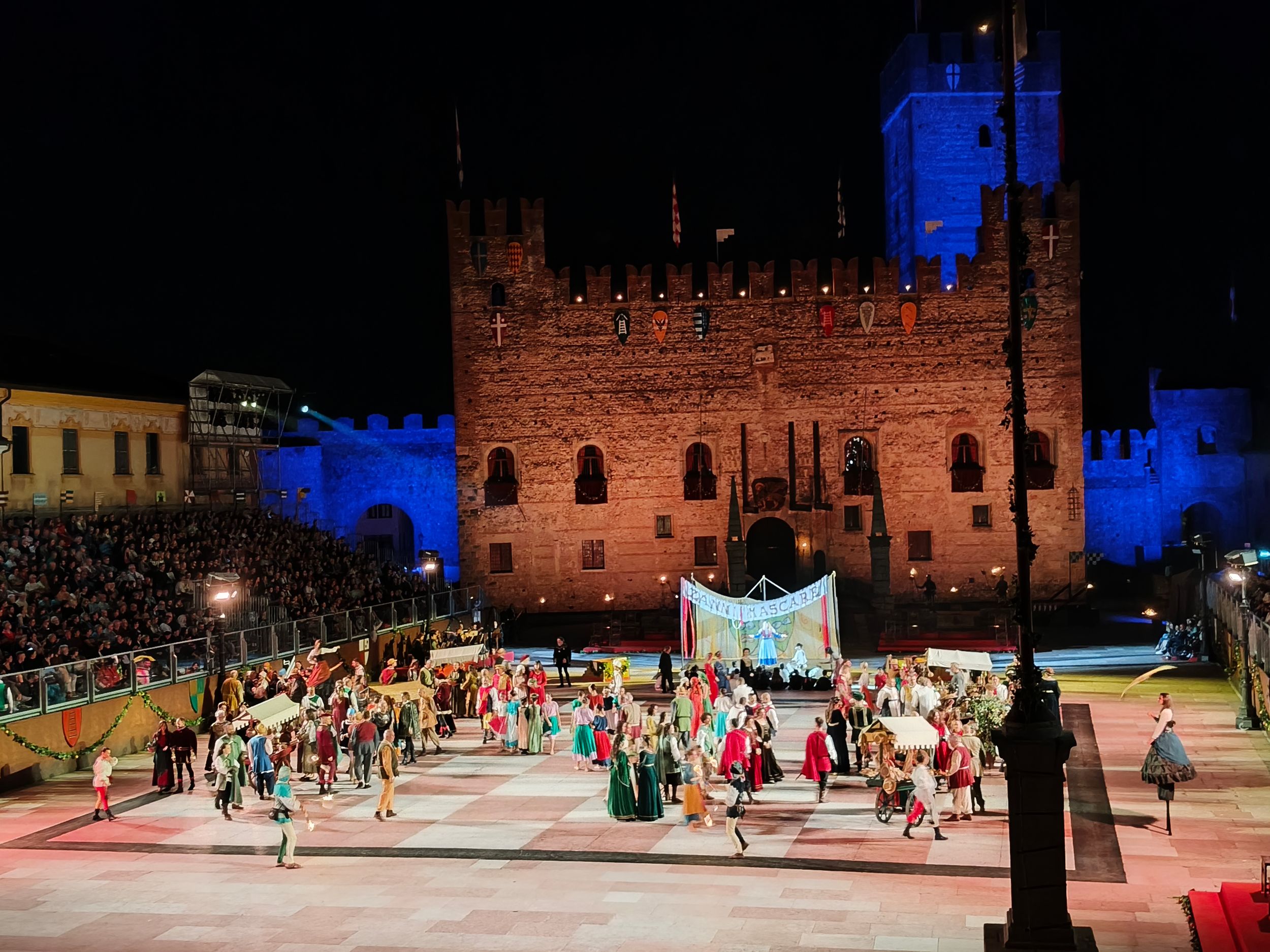
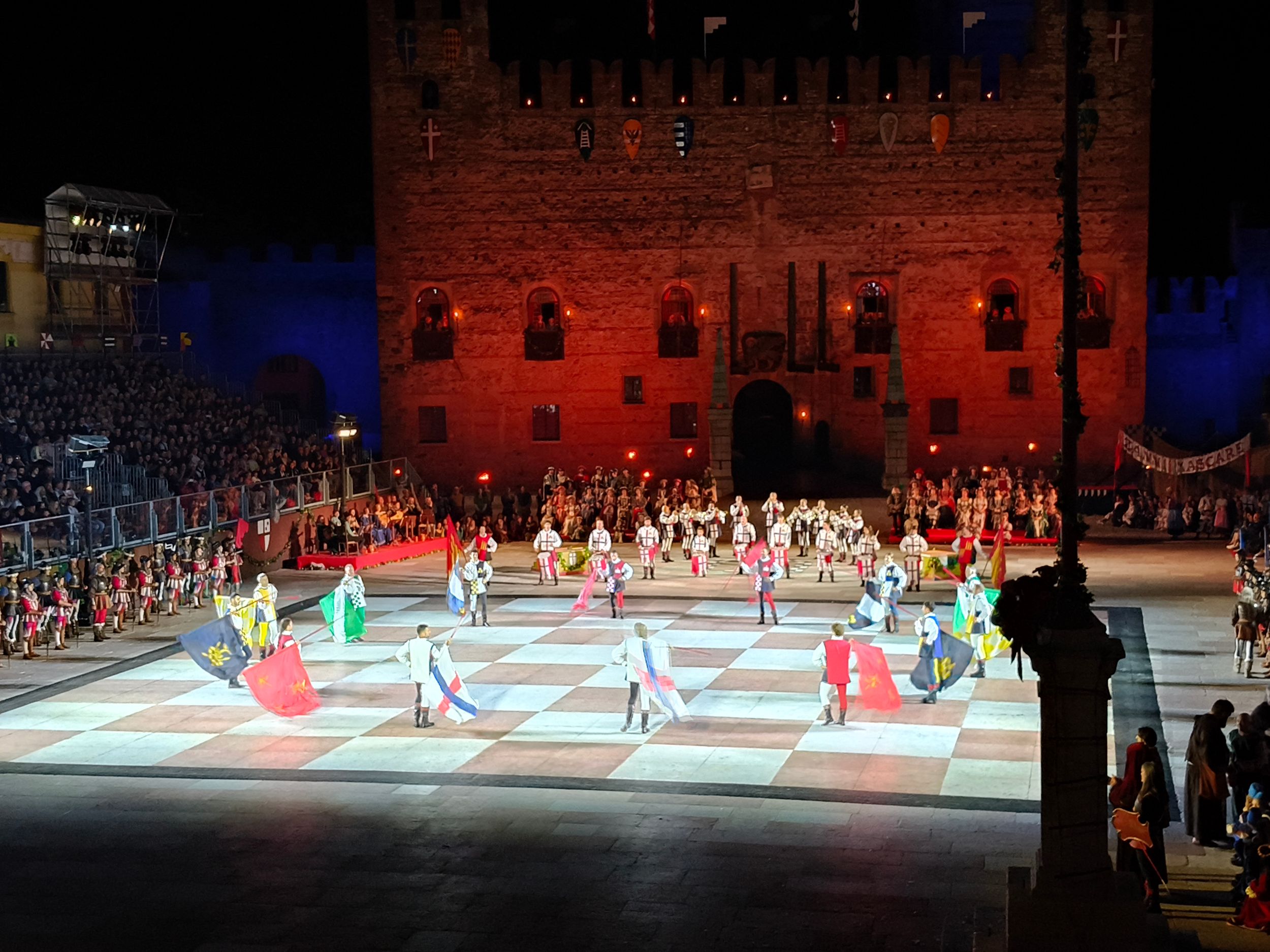
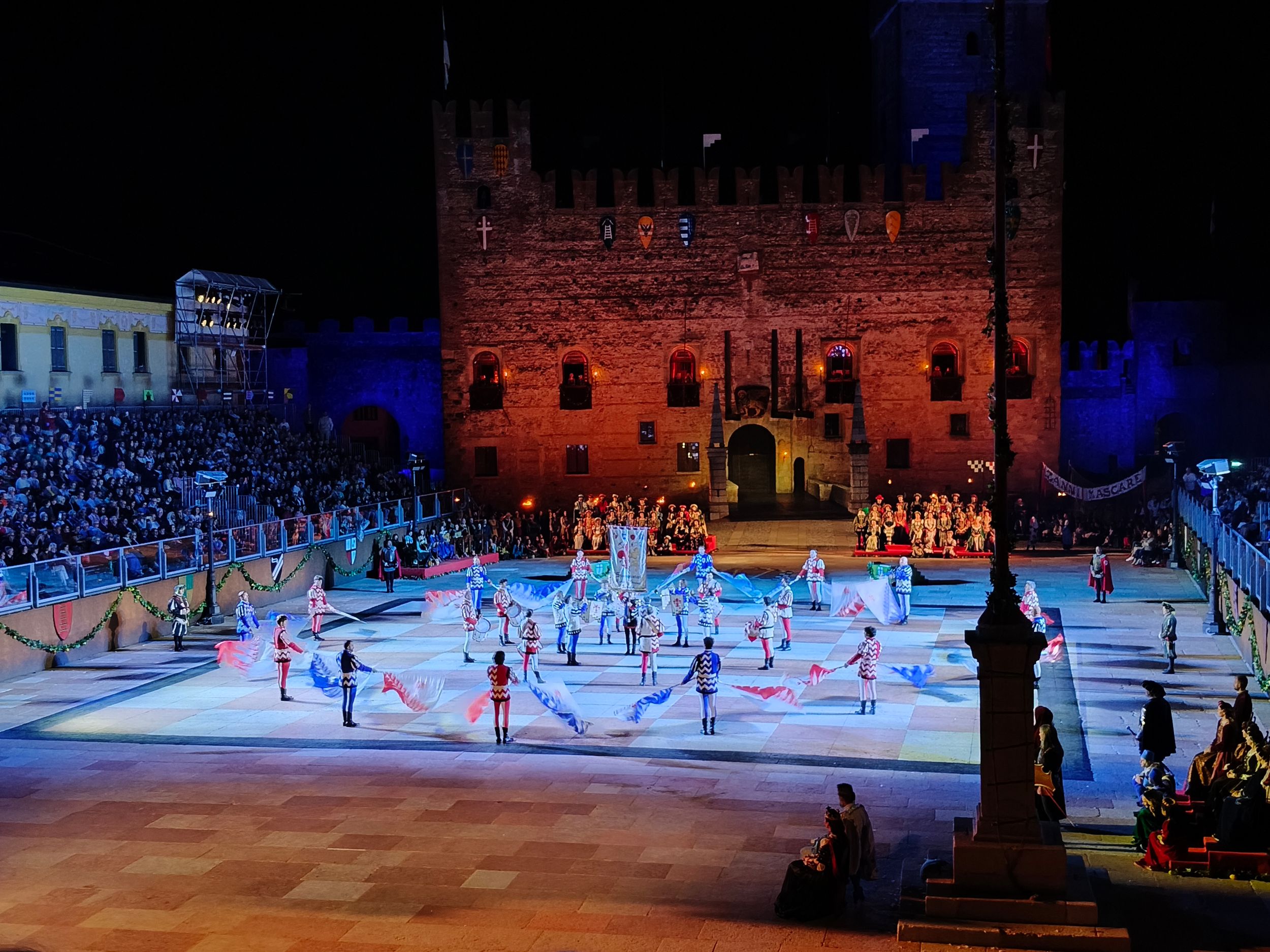
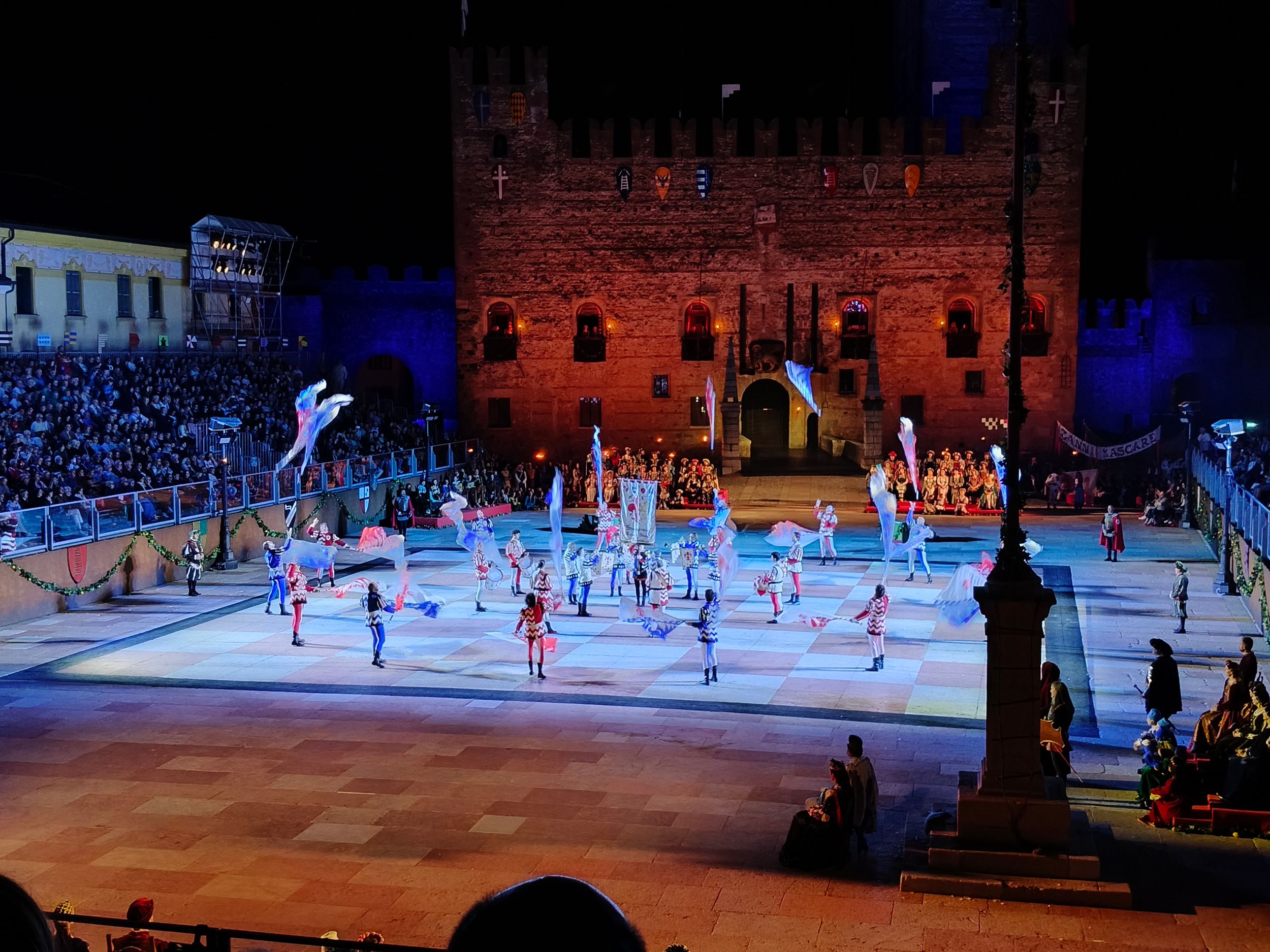
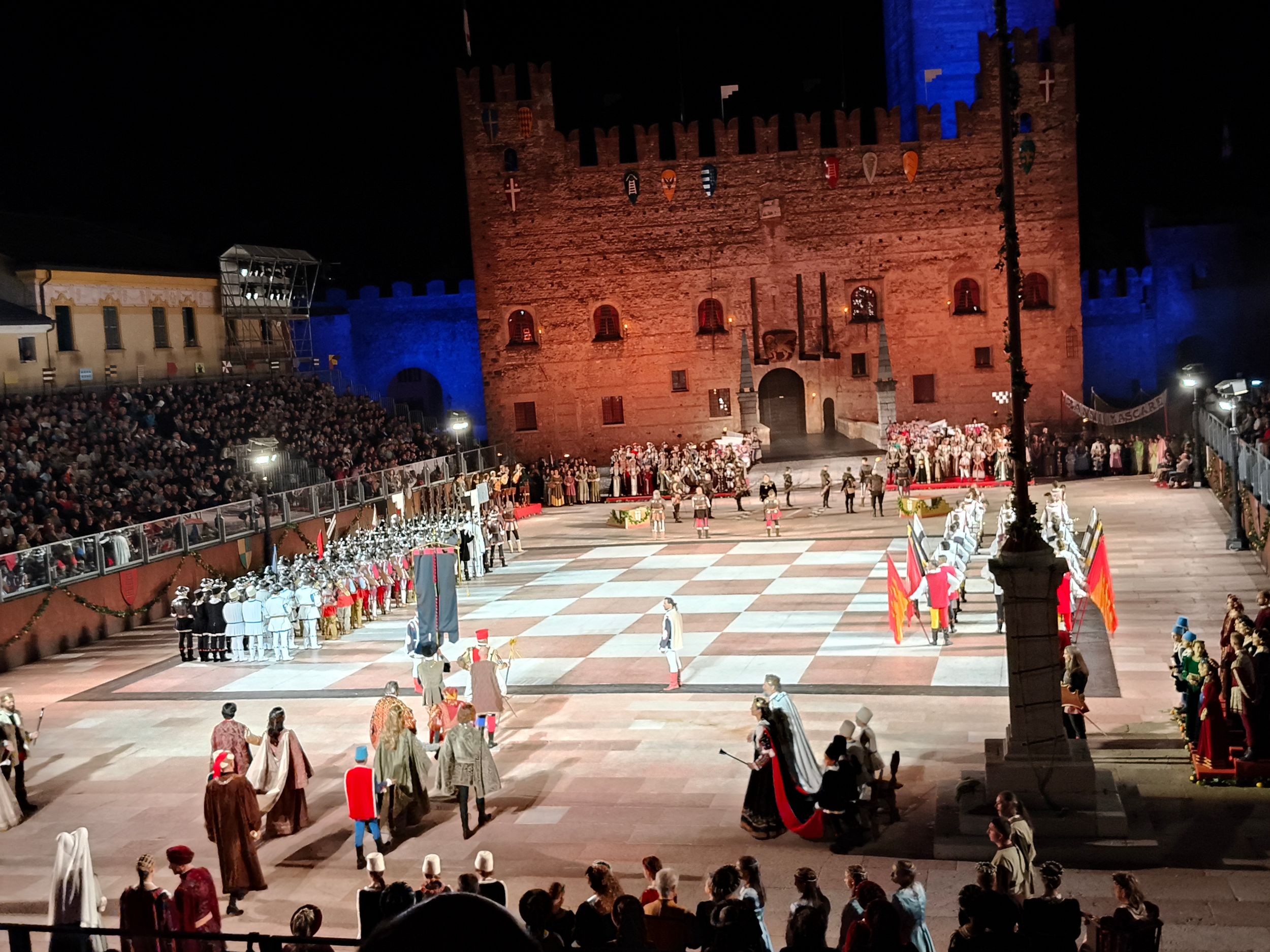
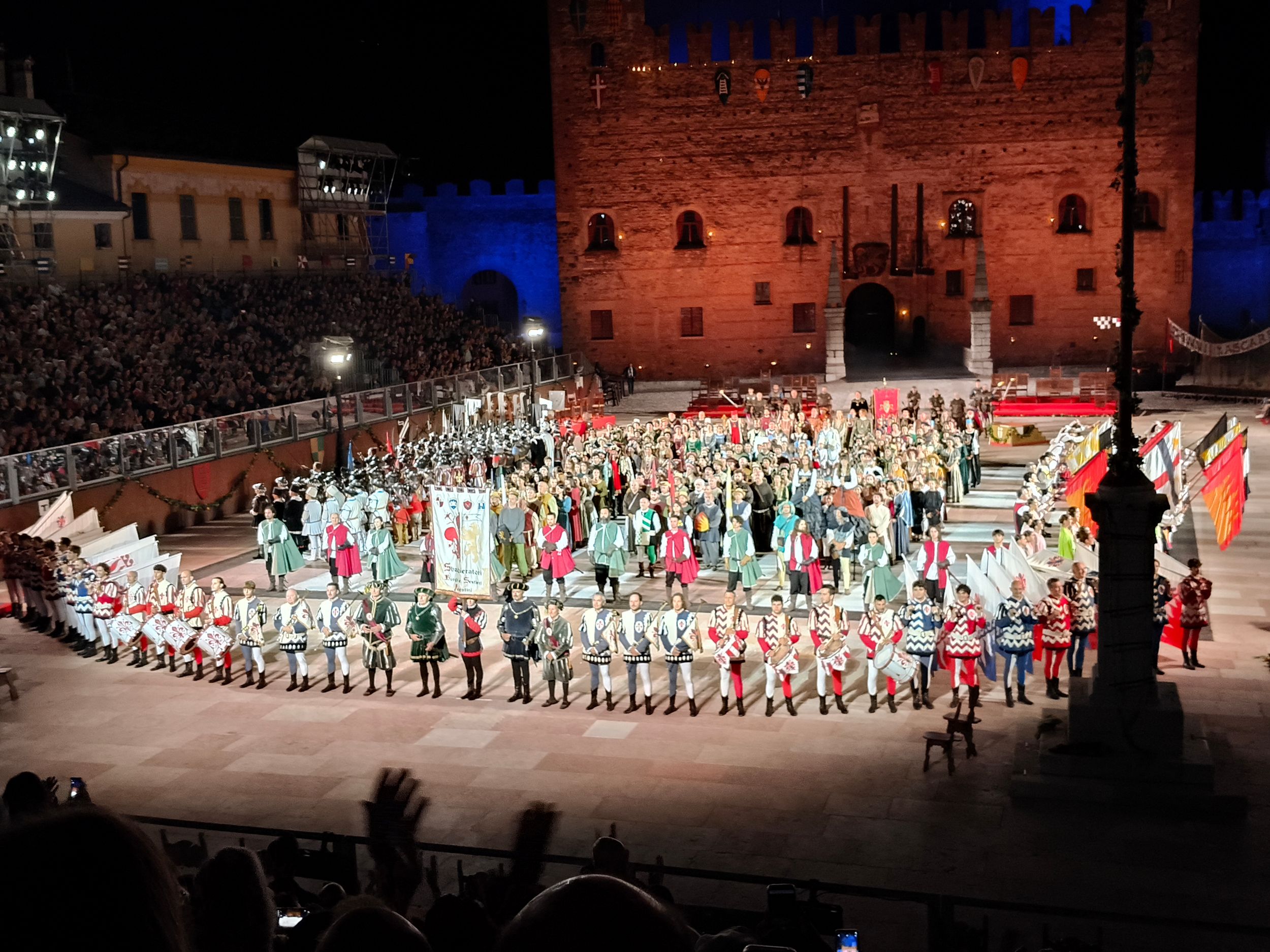
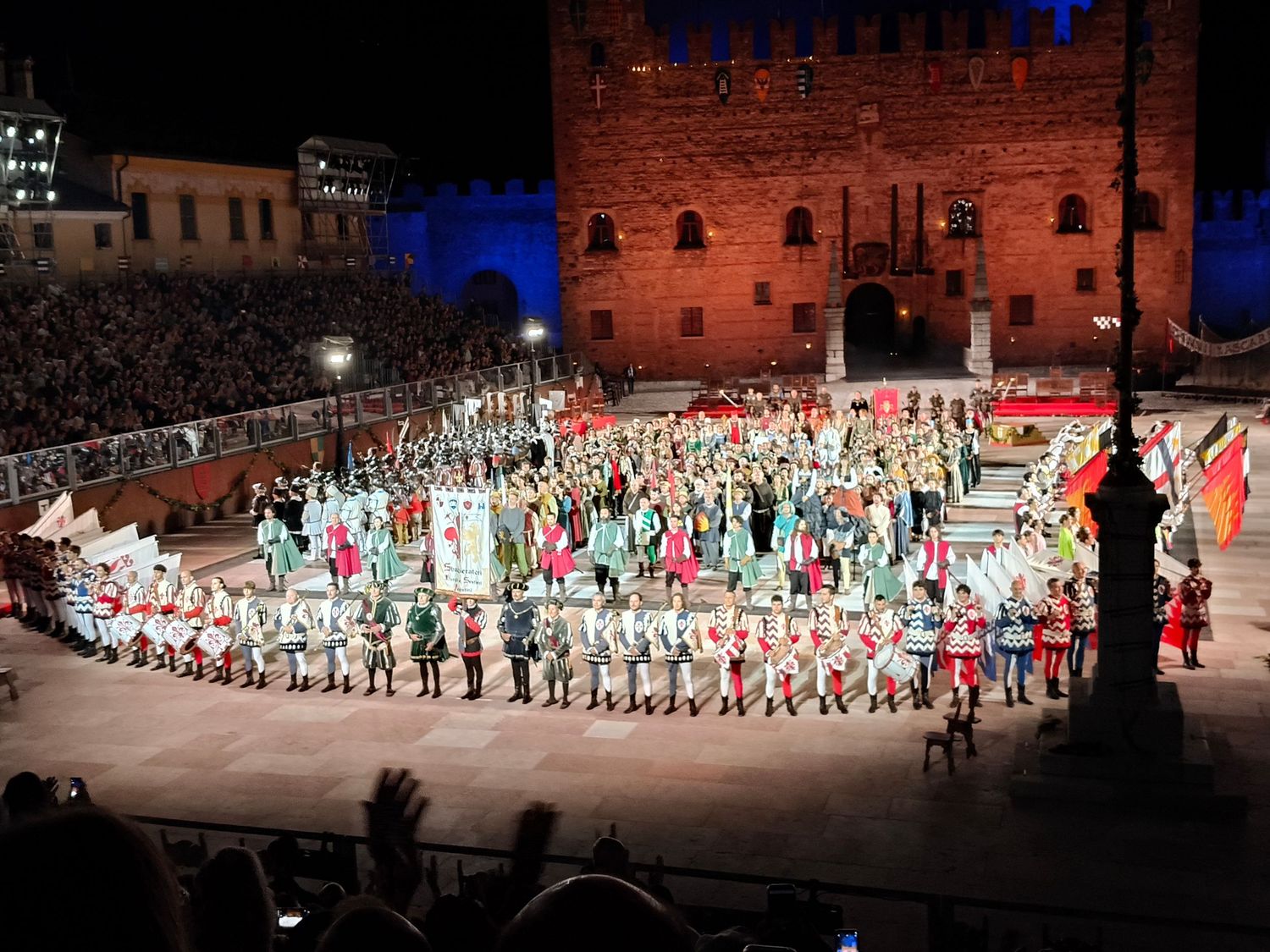
In northern Italy, at the foot of the picturesque Asiago Plateau in the province of Vicenza, lies the charming medieval town of Marostica. Every two years, its main square - Piazza Castello - is transformed into a giant chessboard. Instead of wooden pieces, real people in lavish 15th-century costumes take their places on the marble squares: kings, queens, knights, foot soldiers, and even rooks.
The famous Chess Game with Living Characters (Partita a Scacchi a Personaggi Viventi) is not just a historical celebration, but a grand theatrical production featuring more than 600 city residents, attracting spectators from all over the world.
According to tradition, the story dates back to 1454, when Marostica was under the benevolent rule of the Venetian Republic. Two brave and noble knights - Rinaldo d’Angarano and Vieri da Vallonara - fell passionately in love with Leonora, the beautiful daughter of the local governor, Taddeo Parizio. According to the laws of the time, the rivals were to face off in a deadly duel. However, the governor, wishing to avoid bloodshed and spare the lives of both young warriors, issued a decree: "Leonora’s fate would be decided by a bloodless and noble game of chess, and the loser would receive her younger sister, Oldrada, as a wife as a consolation prize".
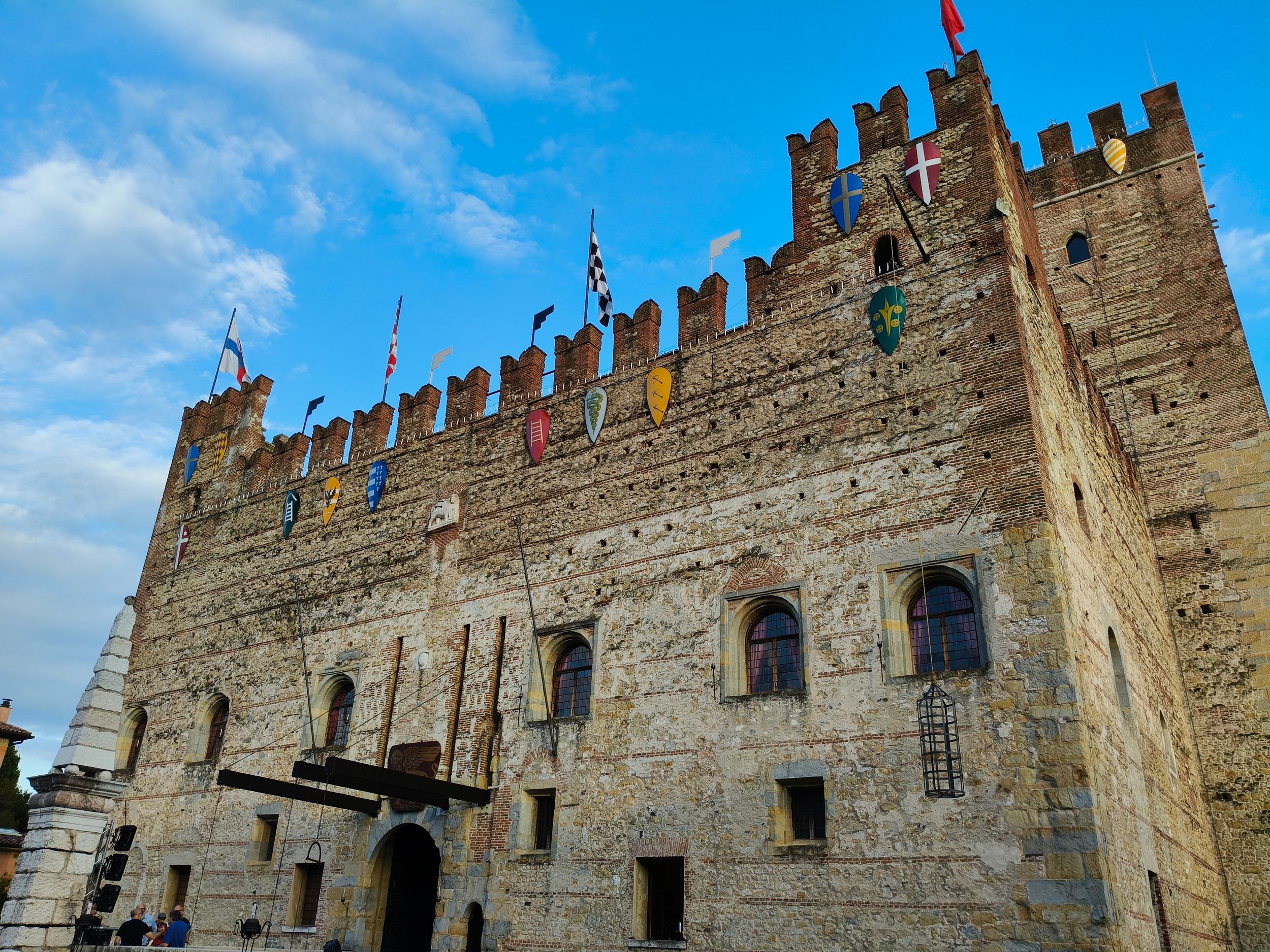
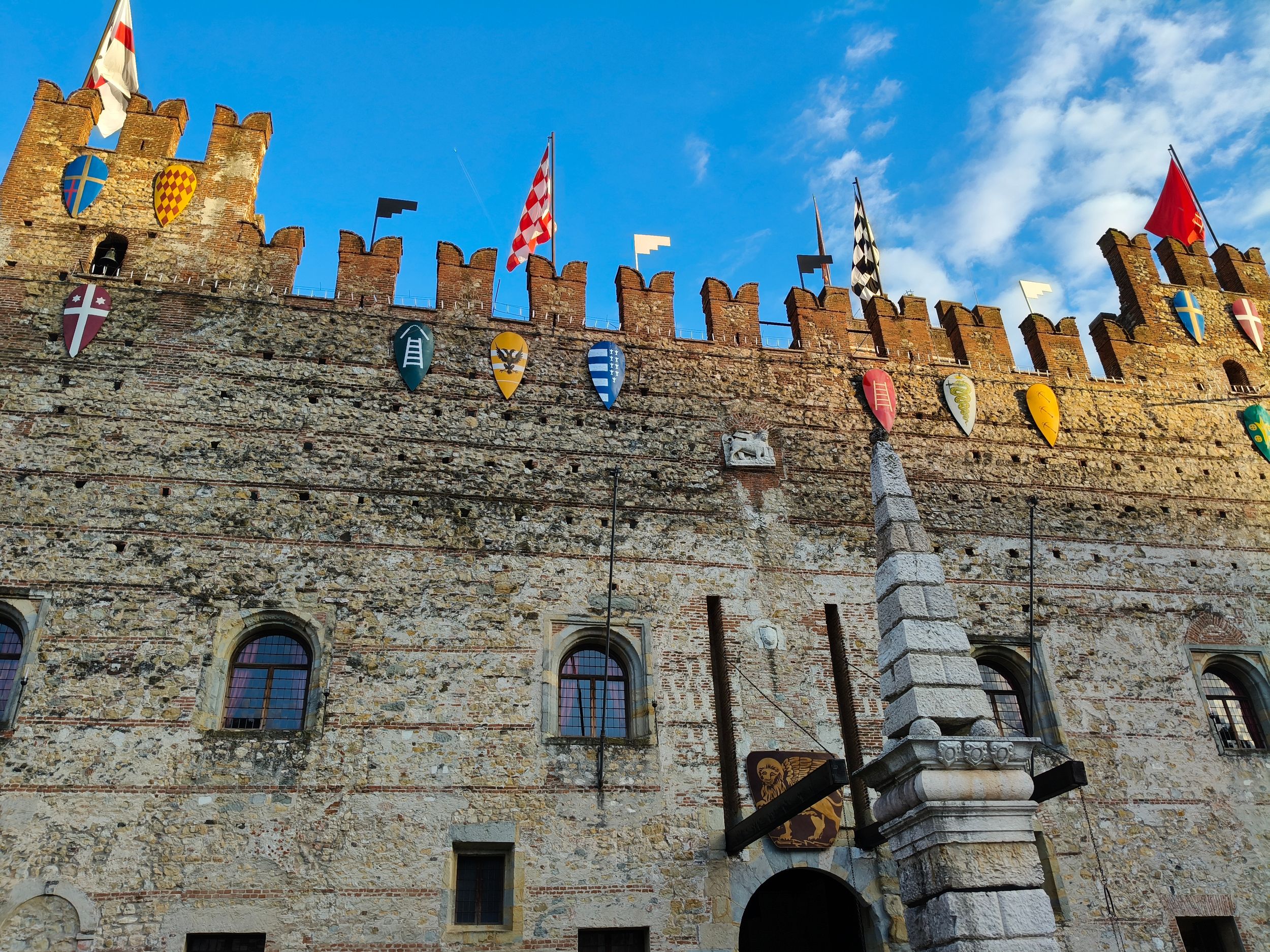
The match took place right in front of the Lower Castle in the presence of the nobility and townspeople. In honor of the winner and the two weddings that had taken place, the town organized a lavish celebration featuring music, dancing, and torchlight processions.
Although the story itself is shrouded in romantic legends from the 15th century, the modern format of the festival originated in the 20th century. In 1923, Francesco Pozza, a native of Marostica and a great theater lover, proposed bringing the legend to life in the town square. The first live performance was a huge success, and an airplane even circled overhead, showering the audience with greeting cards. Then, in 1954, artist and director Mario Mirko Vučetić revised the script, created detailed sketches of 15th-century costumes, and wrote the classic libretto for the performance, which is still performed today with only minor changes.
Today, the Italian Ministry of Culture recognizes Marostica’s Living Chess as an official part of the country’s cultural heritage (Patrimonio d’Italia per la Tradizione).